This is such a popular piece that it’s easy to overlook just how clever it is as a composition – it was once an A Level set work. Don’t forget that it was composed by a seriously competent symphonist.
The motet was written for the dedication of the Votive Chapel in the New Cathedral ‘Mariendom’ in Linz in 1869 – the largest church in Austria (but not the tallest as no tower could be taller than that of St Stephen’s Cathedral in Vienna), replacing the smaller Old Cathedral ‘Alter Dom’ just off the main square (Hauptplatz).
It’s composed for unaccompanied SATB, and is in ternary form. Let’s look at just how Bruckner manages a considerable harmonic and tonal scheme within such a small space.
The opening phrase takes you from C major to D minor.

That’s repeated up a tone from D major and developed through repetition to G major.
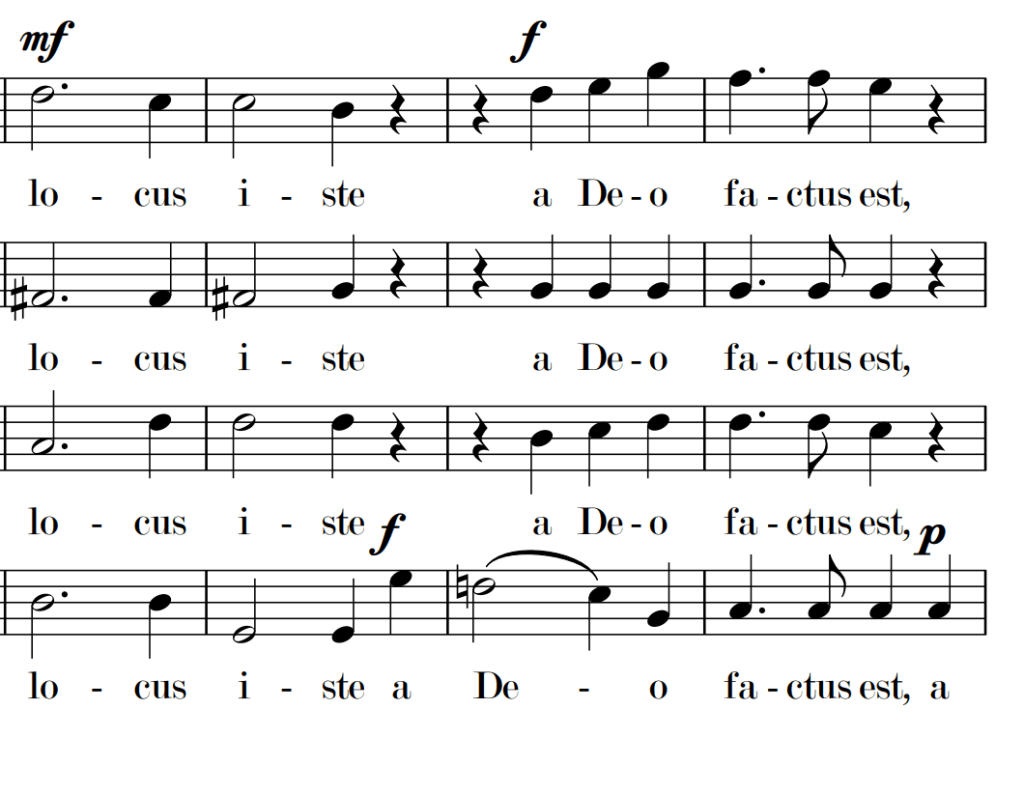
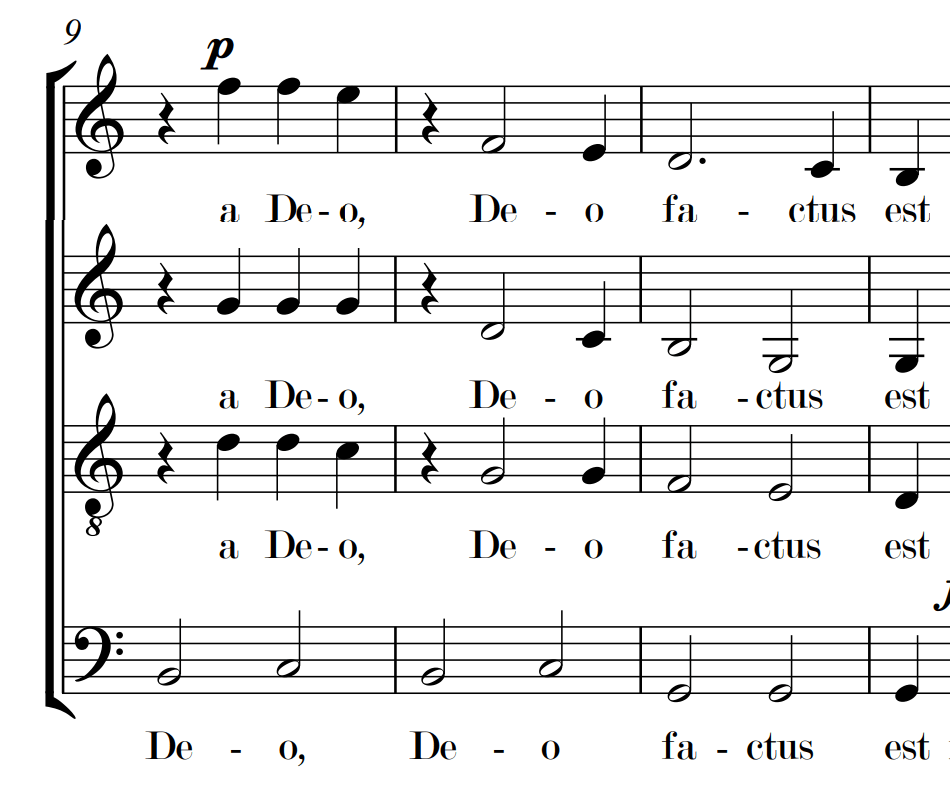
From there the basses take a rising G minor melody (stepwise then arpeggio) to a first inversion then A major (hinted as dominant of D minor, sub-dominant of E minor, or is it just as A major?):
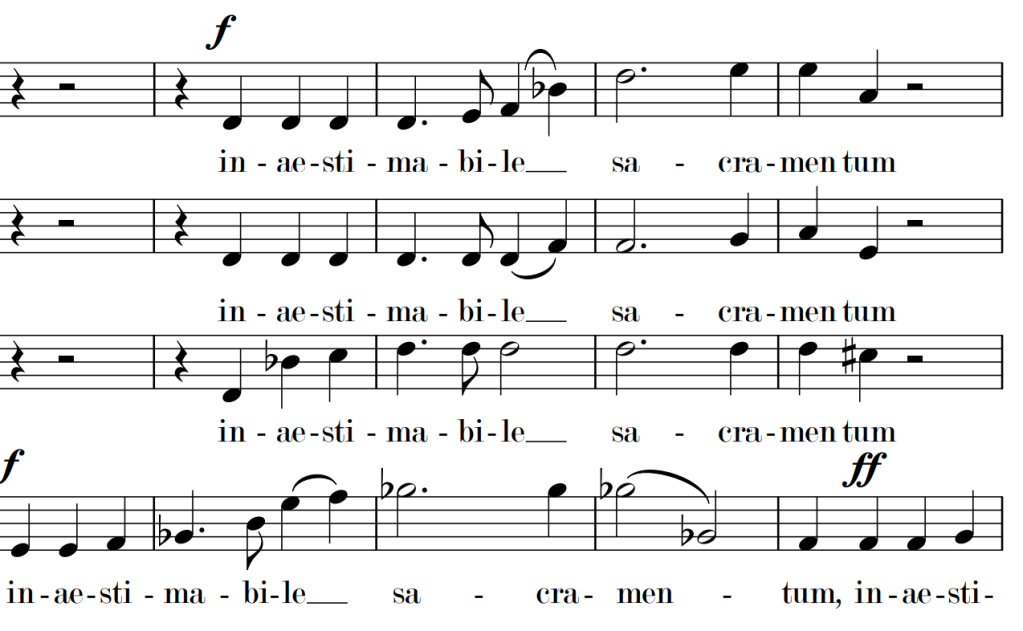
This is then repeated (just as the opening C major to D major) as a rising sequence, taking us to B major at ‘sacramentum‘, which acts as a chord V taking us to E minor for the new B section.

Short version – C major, D minor/major, <chromatic section>, E minor in 21 bars.
The first section was all about, in the words of Heather from M People, moving on up. The second is about releasing that tension and bringing us somehow back to where we began for a repeat of the A section.
How does he do that? Through a descending sequence consisting of the alto and tenor in descending chromatic passages, and the soprano having a two-pitch rising figure which also descends.
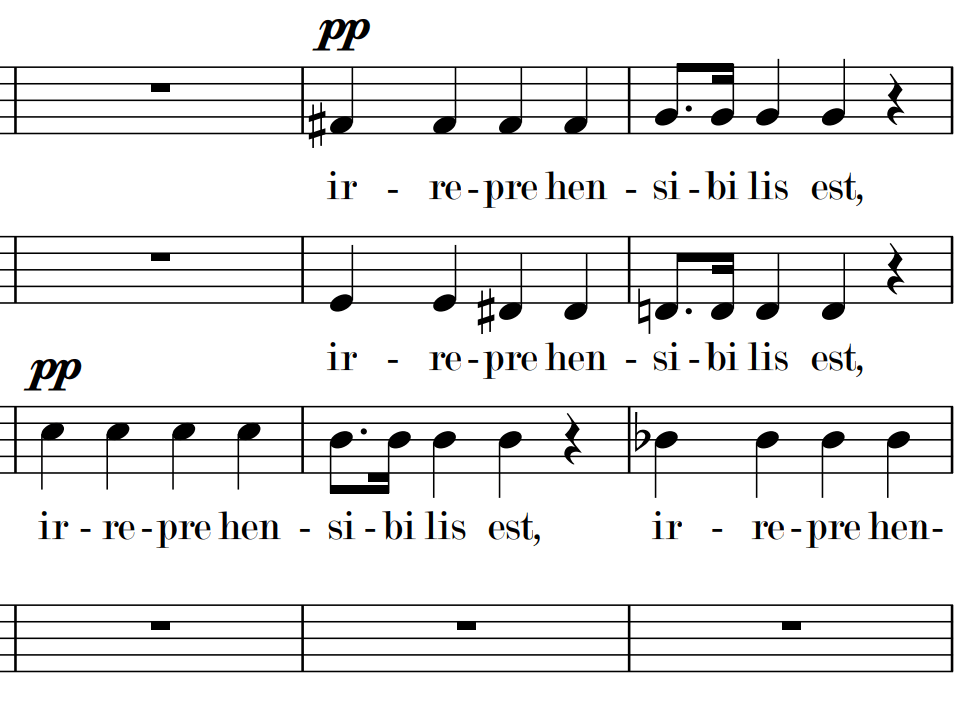
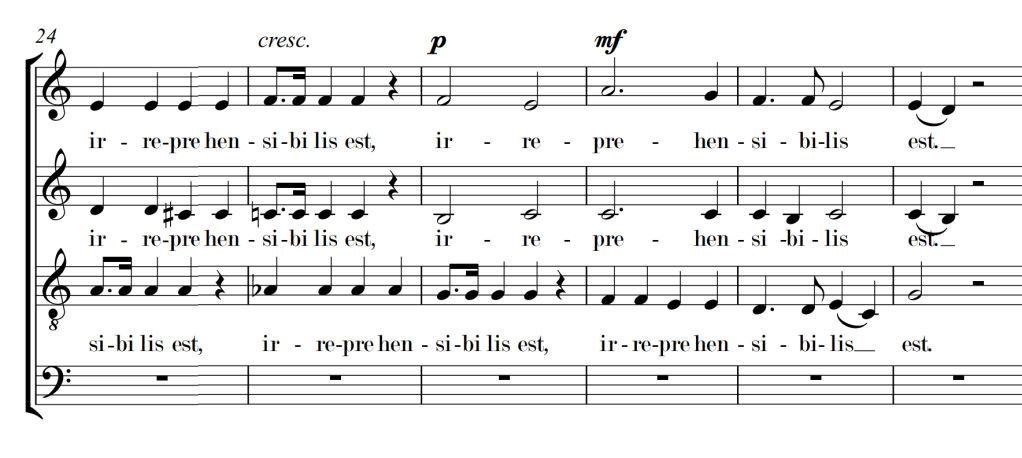
By bar 26 this is hinting at the dominant of C major, and a basic conjunction of chords IV, V, and some version of I bring us to a dominant chord ahead of a repeat of the first section.
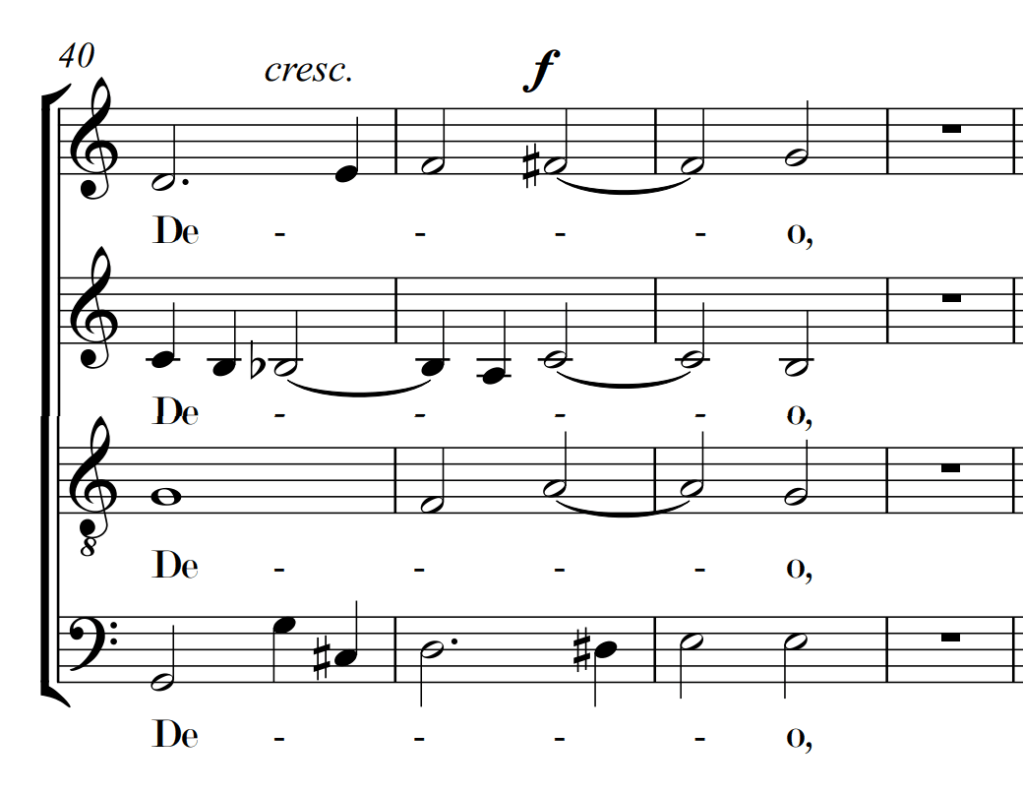
The repeat of the first section is as you’d imagine. However, at bar 40 the magic happens where he takes the rising C major, D minor/major, <chromatic section>, E minor of the first section in just three bars through some chromatic shenanigans, giving us the opening harmonic movement of the piece, but in just three bars: Phenomenal Compositional Power, Itty Bitty Composition Space)
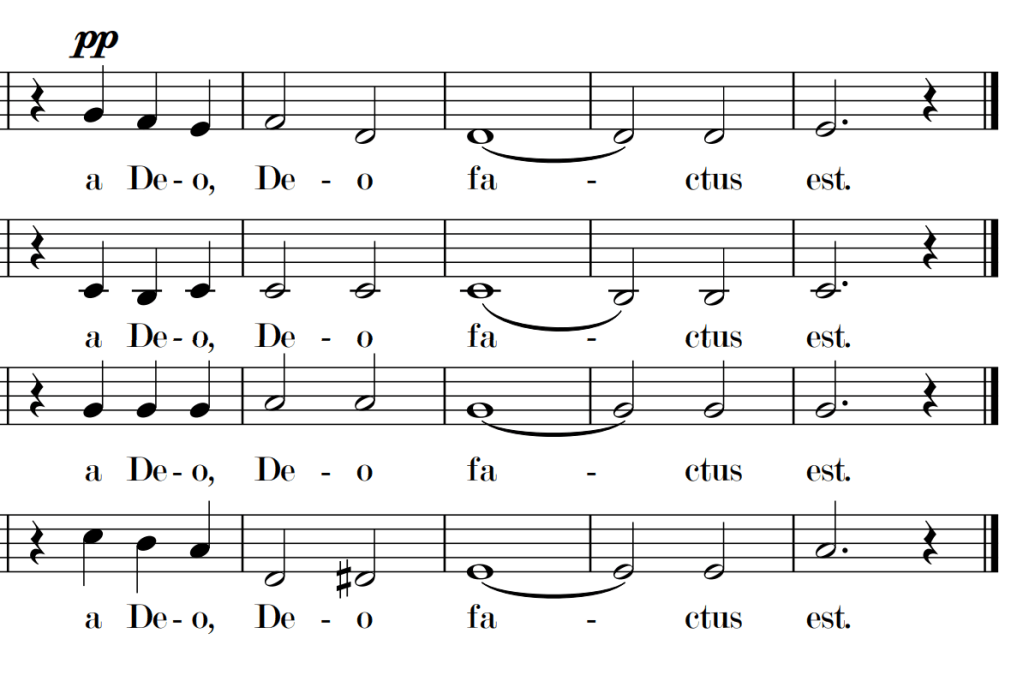
Having wound it up briefly, he releases the tension through to a V(4-3)-I cadence.
So – enough of the lecture – here’s the music!
 The Listening Project Blog