Composed in 1780 for liturgical use in Salzburg Cathedral, Mozart sets the five evening psalms for Vespers. The title ‘for the feast of a Confessor’ (‘de confessore’) was added later.
The psalms are set in what we’d call a stile antico style – the ‘old’ style, so they are quasi-Baroque, with some fugal writing. The scoring is very grand – SATB choir and soloists, strings, 2 trumpets, 3 trombones copying the alto, tenor and bass choir parts, timpani, and continuo.
The movements are:
- Dixit Dominus (Psalm 110) – fast, in C major
- Confitebor tibi Domine (Psalm 111) – not quite as fast, in E flat
- Beatus vir (Psalm 112) – we had Monteverdi’s setting recently – this is very fast in G
- Laudate pueri Dominum – a D minor fugue with a lot of diminished 7th action
- Laudate Dominum – the most famous movement, with a long soprano solo – in F major, Andante
The psalms are then followed by the canticle sung at Vespers – the Magnificat (we heard Bach’s 1723 version at Christmas).
As a side note, here’s a page from Mozart’s original manuscript – even he made mistakes!

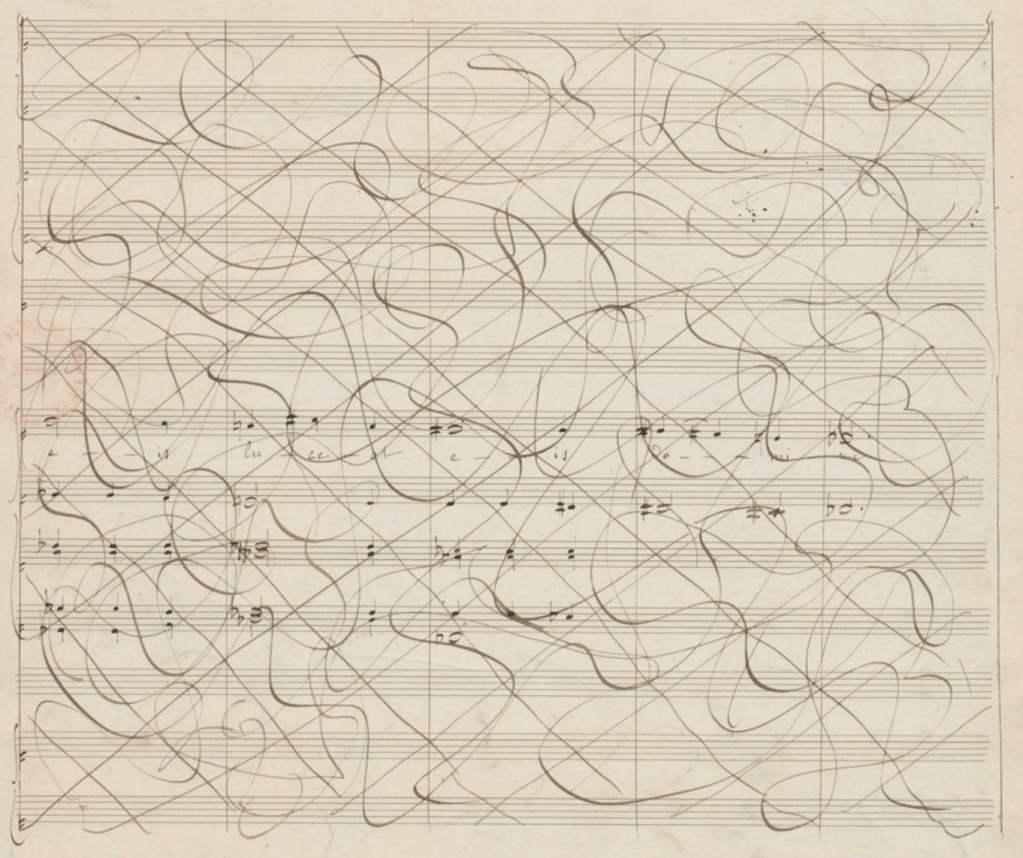
although perhaps the ‘most beautiful crossing out award’ goes to Fauré in his manuscript for the Requiem:
 The Listening Project Blog