We can add more passing notes, ornament some parts, but in terms of harmony, let’s use the magical world of suspensions:
A suspension is where a note is prepared, clashed, and resolved:
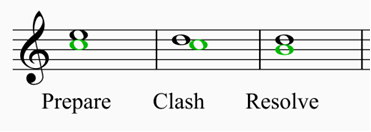
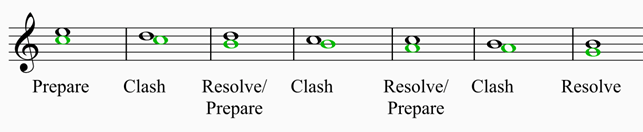
If you repeat this process, with the resolved note then become the next prepared note, you get a chain of suspensions:
If we now take our super-duper version of Twinkle twinkle, lets see where we can add some suspensions:
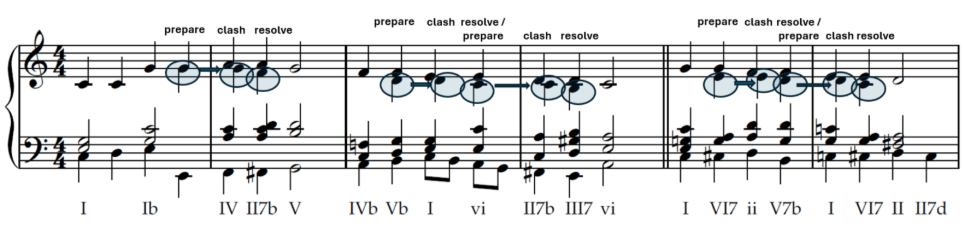
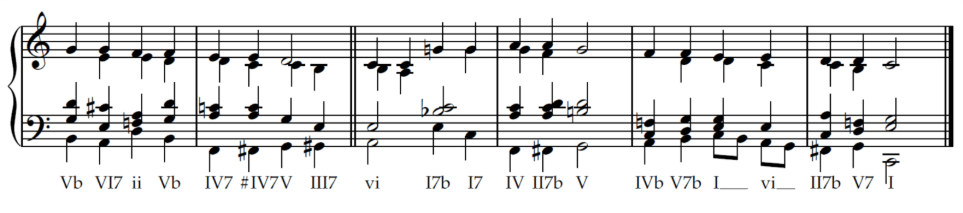
Can you spot the suspensions in the second line?
Next steps:
There are other things we could do to now that we have the use of inversions, different cadences, modulations, passing notes and sequences.
We could try using a diminished 7th at the end of the second bar in the second system, by making the E an F natural
We could try using extended chords
We could look at different types of 6th chords, but that’s for another day…!
To explore guides to using harmony, try this BBC Bitesize section on how to use harmony, and then how harmony is used in the Baroque, Classical and Romantic eras, and into the 20th century:

