In Paris three years after the Grieg String Quartet, 35 year old Gabriel Fauré is writing the first drafts of a ‘cello sonata in 1880 (he would write two later in his life – one in 1917, the other in 1922).
He would usually start with the slow movement, and having just finished his first Piano Quartet in C minor he stayed in the same key. He never completed the rest of the sonata, and published the slow movement under the title Élégie in 1883.
It is, typically for Fauré as we saw in his chansons, an excellent example of economy in how to write a good melody.
The main theme consists of a descending 1-bar motif, which is then in descending sequence:
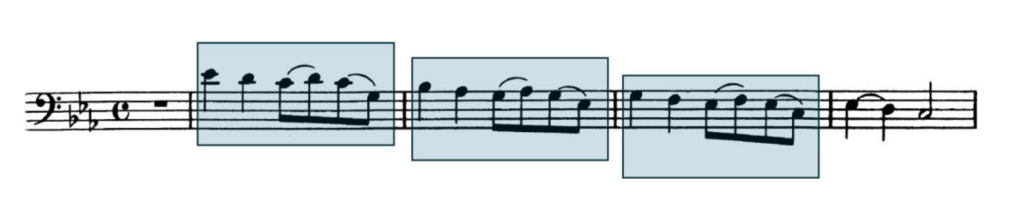
Each bar also starts with a descending ‘three blind mice’ motif, which completes in the last bar as a
descending C minor scale to C:

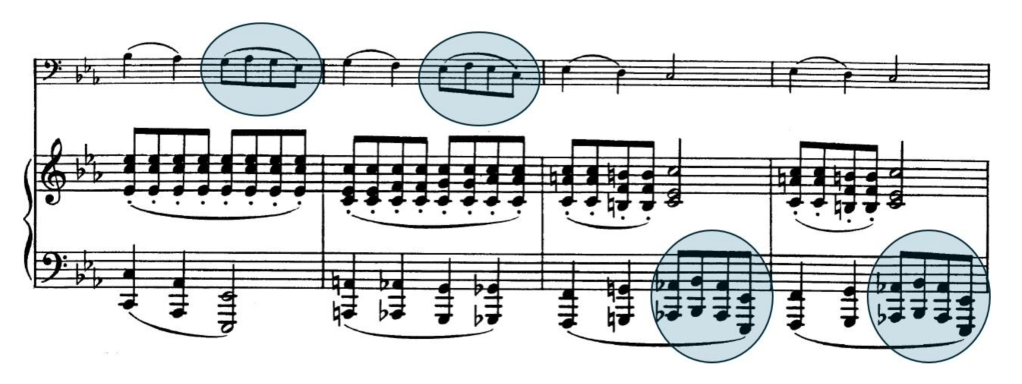
For now, just make a mental note of that quaver pattern in the second half of each bar – it’ll come up later.
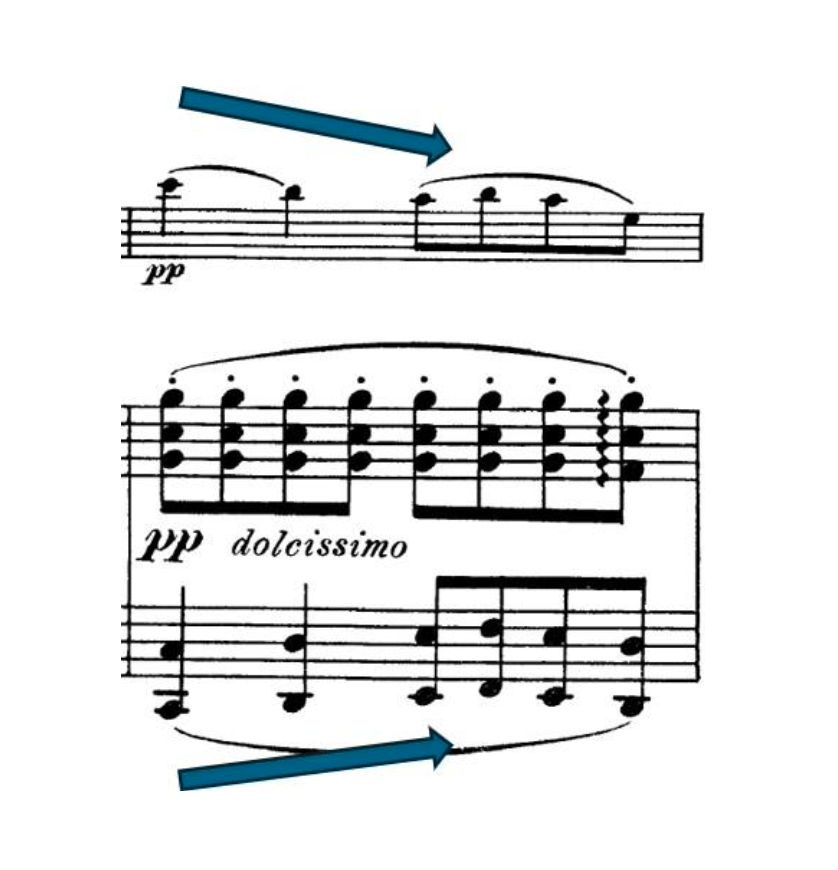
In the accompaniment, this is balanced by the lowest notes being in contrary motion:
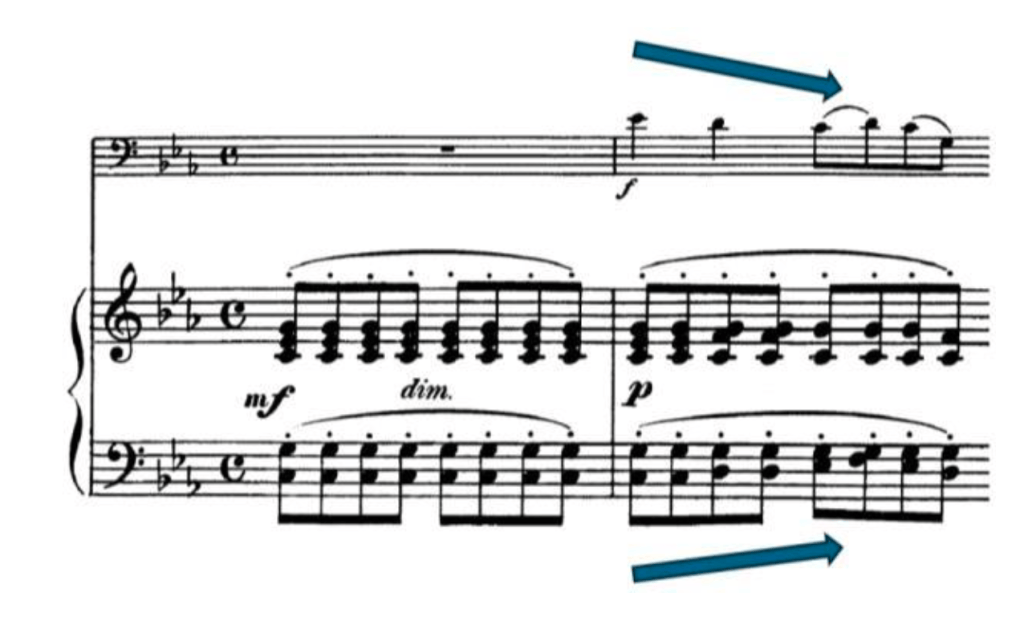
which itself is seen better when the first melody repeats:
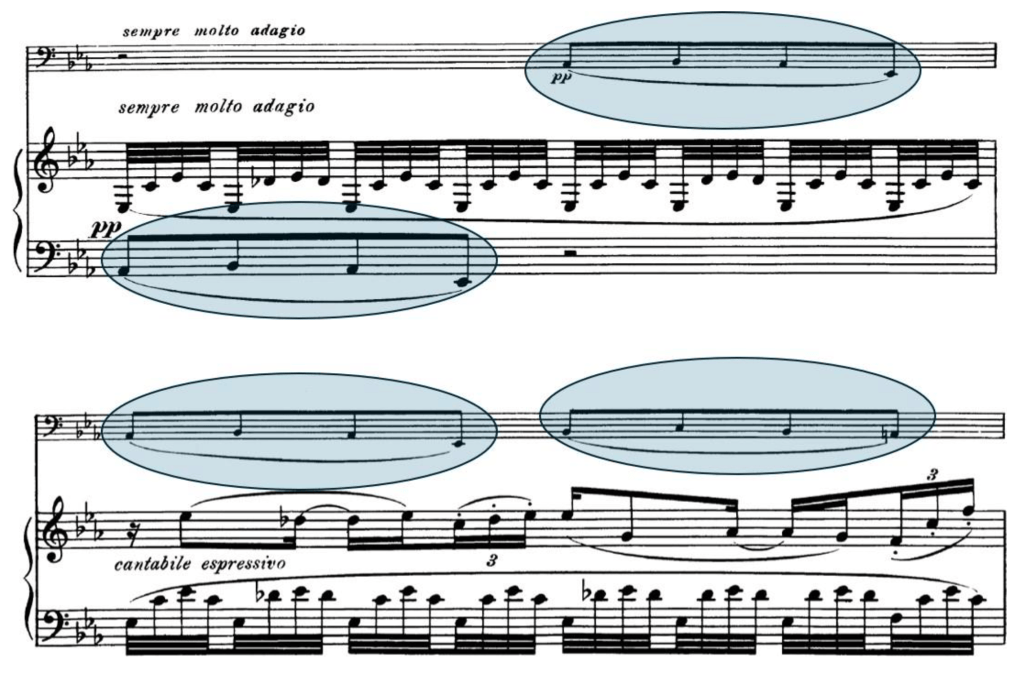
Fauré then takes the motif from the second half of the one-bar motif to make the accompaniment for the A flat major B section:
which then becomes the bass line in the cello, with the accompaniment in the piano LH, and melody in the piano RH.
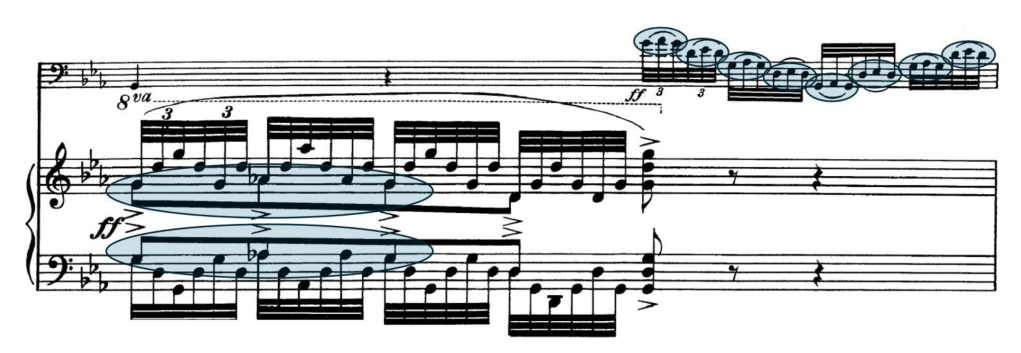
Fauré then, in real economy of material, takes the rising/falling three notes at the start of that motif, and uses it as the dramatic transition back to the repeated A section:
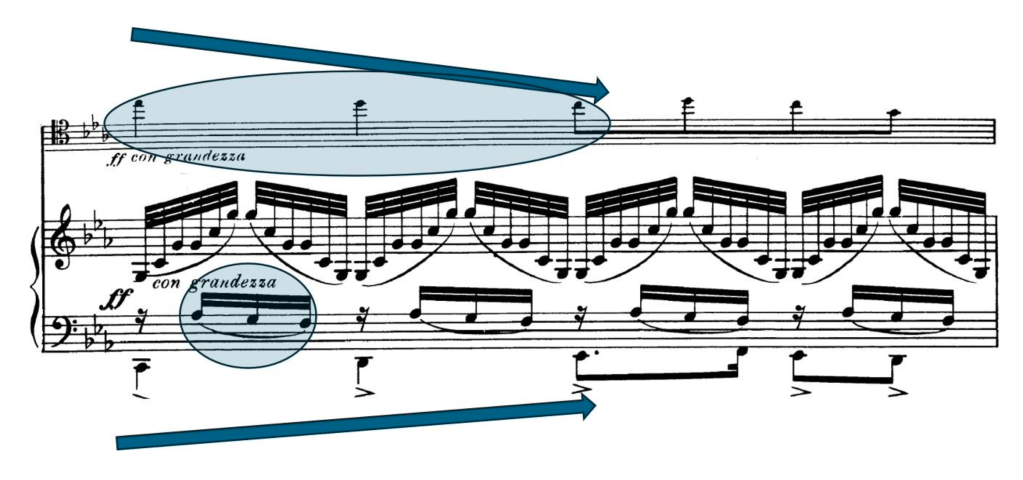
When the main theme returns, in dramatic fashion, we can see:
- The one bar motif as at the start
- The use of contrary motion
- But in addition the three-blind-mice part of the melody is used as a descending semi-quaver motif in the LH of the piano:
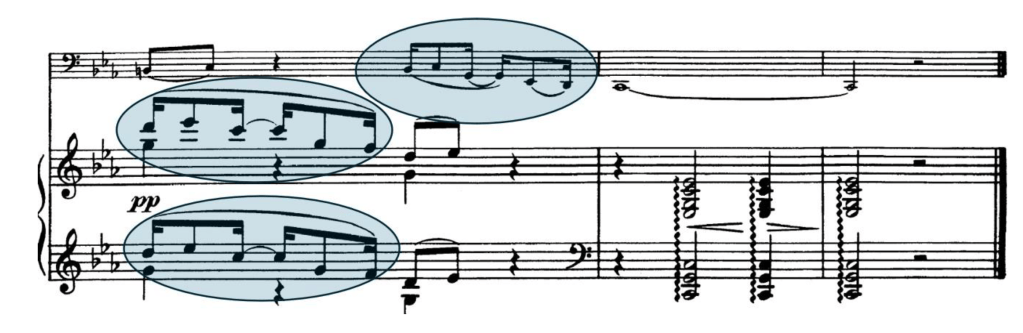
To conclude, Fauré uses the offbeat melody from the B section, echoed between piano and ‘cello, before ending on the ‘cello’s lowest note – bottom C, and no Tierce di Picardie.